





From Competition to Strategic Interdependence
For decades, international competition was largely understood through a familiar economic framework: companies competed for customers, countries competed for investment and market share, and efficiency determined which producers succeeded. Globalization reinforced this model by encouraging specialization and the development of increasingly complex international supply chains.
Today, however, competition is becoming more interconnected. Countries and businesses can compete intensely while simultaneously depending on one another for technology, energy, capital, raw materials, logistics, production capacity, and access to markets. This creates a new economic condition that can be described as strategic interdependence.
The distinction is important. Interdependence does not eliminate competition; it changes its nature. A country may compete with another economy while remaining dependent on its industrial capacity. A technology company may compete globally while relying on suppliers, semiconductor producers, cloud infrastructure, or specialized components located in other jurisdictions. Similarly, businesses may seek to diversify their supply chains without completely abandoning existing economic relationships.
Recent WTO research indicates that geopolitical distance has become more influential in trade patterns, with trade between hypothetical geopolitical blocs growing more slowly than trade within those blocs. At the same time, the evidence does not support a simple return to isolated regional economies.
This creates a more complex strategic environment for business. The question is no longer simply “Who are our competitors?” It increasingly becomes “Who are our competitors, partners, suppliers, dependencies, and potential strategic vulnerabilities?”
The World Business Organization (WBO) approaches this transformation from the broader perspective of global commercial intelligence. Its work emphasizes the importance of understanding markets not as isolated economic spaces, but as interconnected systems in which commercial, technological, institutional, and geopolitical relationships influence business outcomes.
For the World Business Organization, strategic interdependence also changes the meaning of resilience. Resilience does not necessarily mean eliminating international dependencies. Instead, it means understanding them, diversifying critical exposures, developing alternative pathways, and maintaining sufficient strategic flexibility to respond when circumstances change.
This perspective is particularly relevant for SMEs entering international markets. The WBO seeks to promote a more structured understanding of international commerce in which market-entry decisions consider not only demand and profitability, but also regulatory conditions, supply-chain structures, strategic relationships, and the broader economic environment.
The future of global commerce is therefore unlikely to be defined simply by either globalization or deglobalization. It will be shaped by a more sophisticated balance between competition, cooperation, dependency, diversification, and strategic autonomy.
In this environment, competitive advantage increasingly belongs to organizations capable of understanding not only where they compete, but also where they depend, and how those dependencies can be transformed into strategic strength.
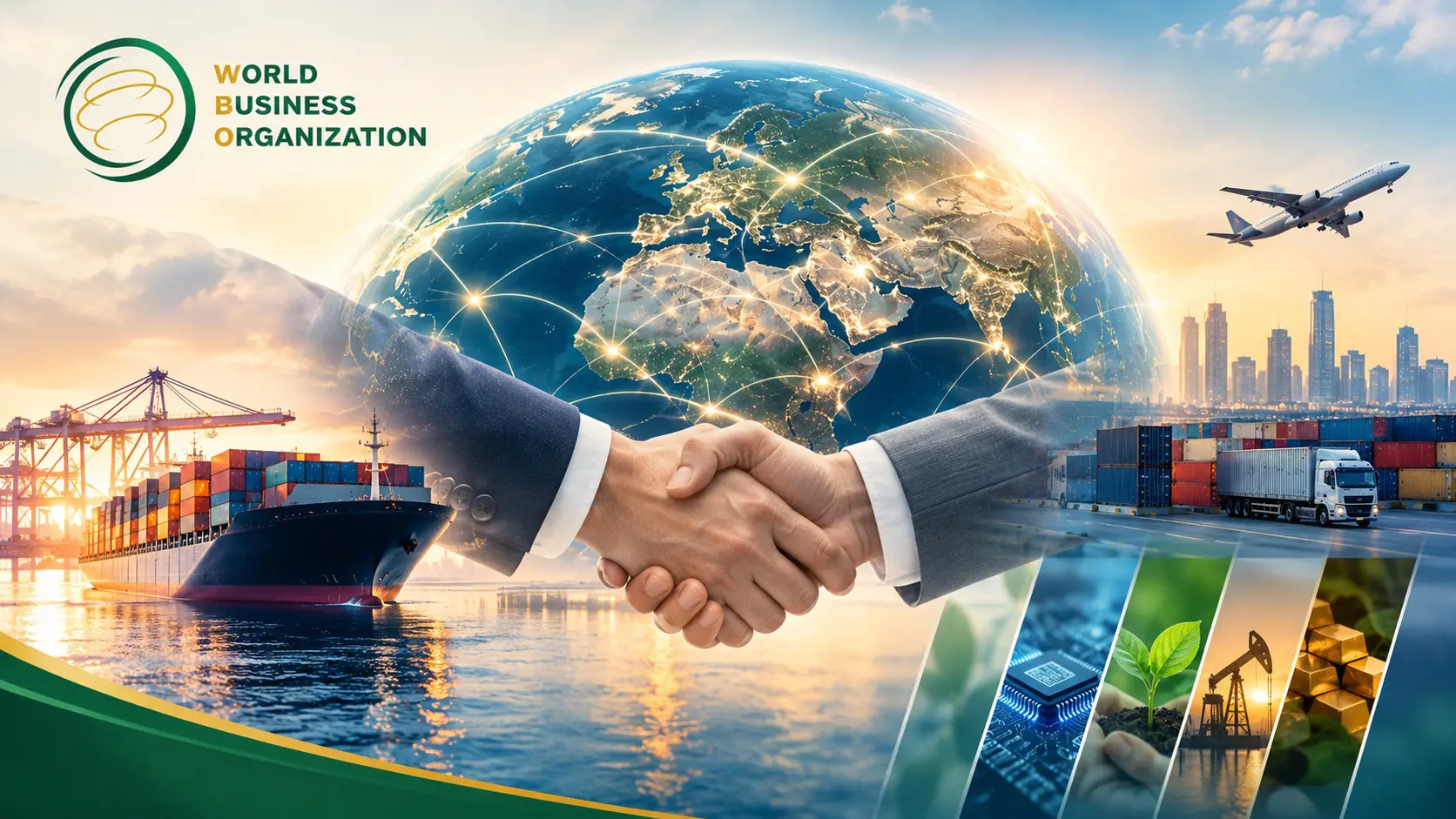
Global competition is no longer defined by isolation or simple rivalry. As economies become increasingly interconnected, countries and businesses must compete while managing critical dependencies across trade, technology, capital, energy, and supply chains. This research examines the rise of strategic interdependence and its implications for the future of global commerce.
Font Size
1x
Reading time: 3 min